
Pollution Prevention Management
WATER RESOURCE MANAGEMENT
All EGAT facilities currently rely on municipal tap water, primarily sourced from the Shimen Reservoir, for various uses including domestic water supply, process water for operations, and cooling tower circulation. To improve water use efficiency, EGAT has installed rainwater harvesting systems at both the maintenance and manufacturing facilities. The collected rainwater is reused for cooling tower operations, floor washing, and other non-potable applications, thereby reinforcing the Company’s commitment to water recycling and circular use. In 2024, total rainwater harvested reached 1,568 metric tons. EGAT remains committed to enhancing its water management strategies by optimizing conservation technologies and reducing reliance on natural water sources.
The water consumption data for the past three years is as follows:
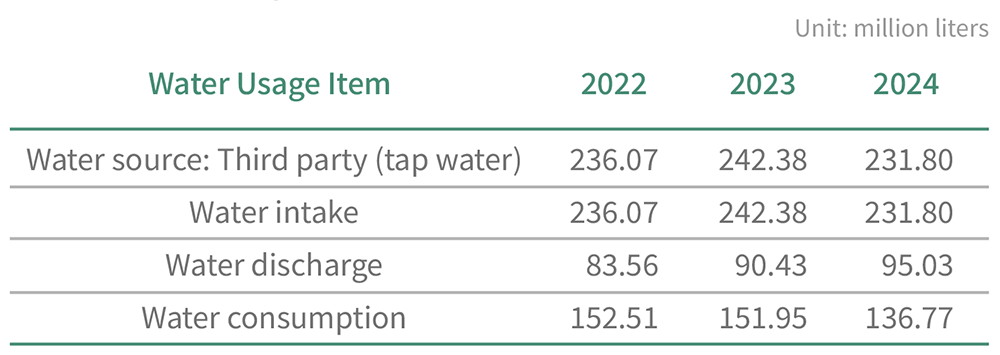
EGAT’s wastewater is partially regulated, so the discharge water quality standards are divided into “regulated discharge water standards” and “effluent water standards”. Regarding wastewater discharge management, the goal is to minimize the concentration of pollutants in water quality to the greatest extent possible while complying with regulatory standards. From 2022 to 2024, the concentrations of COD and SS suspended solids emitted by EGAT have both been better than the regulatory requirements to avoid river pollution.
CIRCULAR ECONOMY AND WASTE MANAGEMENT
To advance circular economy practices, EGAT has implemented a comprehensive management system to minimize the environmental impact of waste. All metal scraps generated during the manufacturing process are properly collected and sold to qualified domestic and international recyclers for re-melting and repurposing, transforming waste into new products. This approach not only supports waste reduction but also maximizes the benefits of a circular economy.
EGAT complies with all relevant regulations in waste handling and actively promotes resource recycling and waste reduction initiatives. Employees are encouraged to participate in these efforts, integrating environmental protection into daily operations. In the future, EGAT will continue to reduce waste emissions from the source through process design, technological improvements, and continuous advocacy for material reuse.
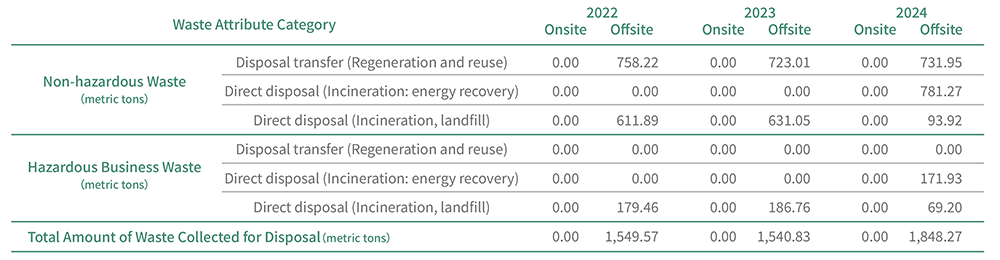
EGAT’s waste is categorized into general business waste and hazardous business waste. General business waste includes common office waste, waste oil emulsions, and mixed plastic waste. Hazardous business waste mainly consists of chemical mixtures. In 2024, EGAT expanded the scope of its waste accounting to include general recyclable resources, waste wooden pallets, organic sludge, and inorganic sludge, thereby improving the integrity and accuracy of waste management. No waste leakage incidents occurred, underscoring the Company’s commitment to responsible waste handling.
MOST RECENT 3-YEAR WASTE DATA STATISTICS
2024 CIRCULAR ECONOMY/WASTE REDUCTION MEASURES
Metal Scrap and Metal Waste Recycling
2024 Achievements
- Guanyin Branch recycles various types of metal scraps, including aluminum, nickel, titanium, and steel alloys, and sells them to recycling companies. These recycling companies then export the scrap to raw material refineries, where it is re-melted and reintroduced into the metal raw material market, contributing to the development of a circular economy. In 2024, a total of 73.464 tons of metal waste were recovered, generating revenue benefits of 5.797 million NT dollars for EGAT.
- Dayuan Maintenance Facility recycles various processed metals and other waste materials, which are then handed over to recycling companies. In 2024, a total of 1.17 tons of processed metals and other waste materials were recovered.
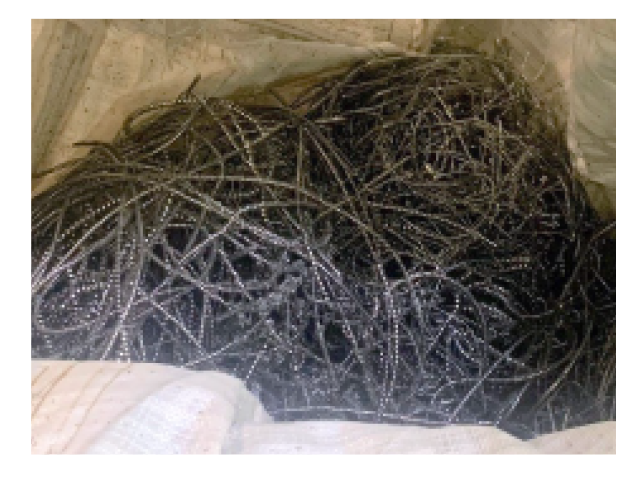 Inconel
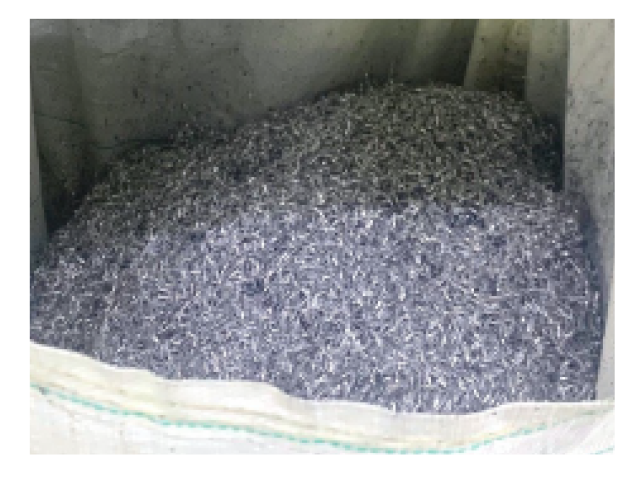 Aluminum Alloy
Reuse of Packaging Materials
2024 Achievements
- Evaluation of the condition of various packaging materials collected when receiving imported equipment for reuse, aiming to reduce the consumption of PE packaging materials.
- Despite a 19% annual growth in unit performance for 2024, the procurement of packaging materials decreased by 21% compared to 2023.