

Composition of the Board of Directors
Corporate Governance Framework
Functional Committees
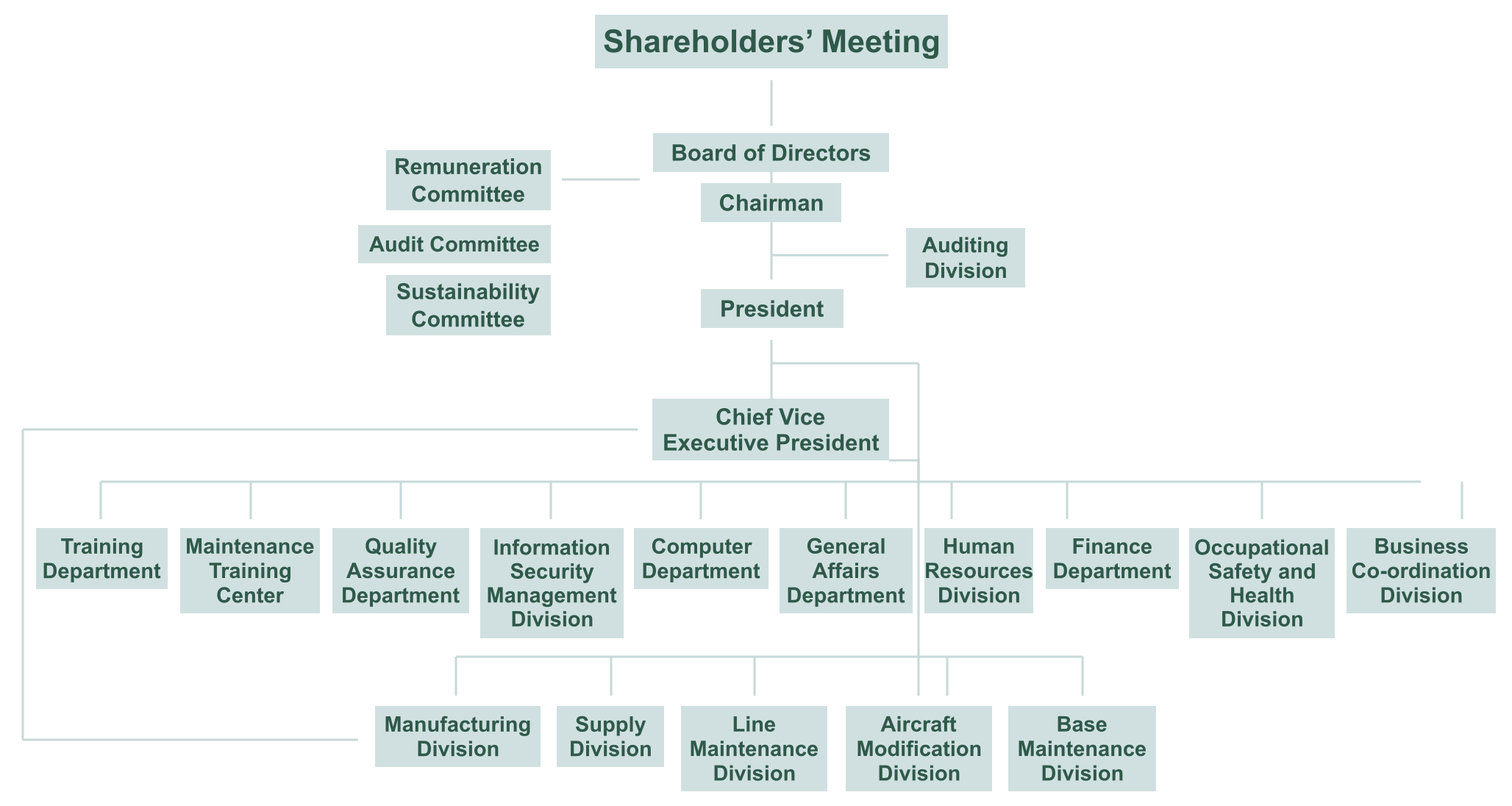
EGAT has established 3 functional committees under the Board of Directors: the Audit Committee, the Remuneration Committee, and the Sustainability Committee. All three committees are composed entirely of independent directors to ensure independent oversight of the company’s financial, remuneration, and sustainability operations.
Audit Committee
To strengthen corporate governance and enhance the functions of the Board of Directors, EGAT established the Audit Committee under the Board of Directors on January 12, 2022. The committee consists of all independent directors, totaling 3 members, with at least 1 member possessing accounting or financial expertise, serving a term of 3 years.
The main deliberations of the Audit Committee include ensuring the proper presentation of the company’s financial statements, appointing CPAs and assessing their independence, and ensuring the effective implementation of the Company’s internal control system.
In 2025, the Audit Committee held 6 meetings with a 100% average attendance rate.
Remuneration Committee
To enhance the integrity of the Company's director and executive remuneration system, EGAT established the Remuneration Committee under the Board of Directors through the Board of Directors’ resolution on January 13, 2022. The committee consists of three members appointed by the Board of Directors, all of whom are independent directors. They possess professional qualifications and independence, and no additional remuneration consultants are hired. The term of office for committee members is the same as that of the appointing Board of Directors.
The main responsibilities of the Remuneration Committee include assisting in the formulation and periodic review of policies, systems, standards, and structures for evaluating the performance and compensation of directors and executives.
In 2025, the Remuneration Committee held 3 meetings with a 100% average attendance rate.
Sustainability Committee
To fulfill corporate social responsibilities and establish a comprehensive risk management system to achieve sustainable development goals, EGAT established the Sustainability Committee under the Board of Directors through the Board of Directors’ resolution on November 7, 2023. The committee members are appointed by the Board of Directors, with five members, and more than half of them are independent directors. The term of office for committee members is the same as that of the appointing Board of Directors.
The main responsibilities of the Sustainability Committee include reviewing policies, strategies, objectives, or management guidelines related to sustainable development (including risk management), and reviewing annual work plans for sustainable development, supervising, tracking progress, and related matters.
In 2025, the Sustainability Committee held 4 meetings with a 100% average attendance rate.
Composition and Functioning of the Board of Directors
Nomination and Election of Board Members
The Board of Directors is the highest governing body of EGAT, responsible for making important decisions and being accountable to shareholders and stakeholders. In accordance with the Articles of Incorporation, nine directors shall be elected, including three independent directors, each serving a three-year term. The election process for directors follows the nomination system as stipulated in Article 192-1 of the Company Act, the EGAT Articles of Incorporation, and the Regulations for Electing Directors. Shareholders holding more than one percent of EGAT’s total issued shares can submit a list of director candidates in writing during the nomination period. Shareholders are required to elect directors from the list of candidates announced by EGAT.
Functioning of the Board of Directors
The operation of the Board of Directors ensures that the overall operation of EGAT is carried out in accordance with the directives of the Board of Directors. The Chair of EGAT’s Board of Directors does not concurrently hold the position of President.
EGAT convenes a Board of Directors meeting at least once every quarter, adhering to the Company Act, Securities and Exchange Act, the Company’s Articles of Incorporation, and the Rules of Procedure to exercise its authority, and discuss and resolve on the Company’s operational plans and various proposals.
To avoid conflicts of interest, no director of EGAT shall have spousal or second-degree relatives among themselves. In cases where proposals discussed in Board meetings involve potential conflicts of interest for a director or the corporate entity they represent, the concerned director shall state the significant content of such interest during that meeting. If the involvement of a director could harm EGAT’s interests, he/she is not allowed to participate in the discussion and voting. He/She shall also recuse him/herself from discussion and voting, and cannot act as proxies for other directors, ensuring that the Board of Directors can independently and objectively execute its duties. For details on directors' recusal from proposals involving conflicts of interest in 2025, please refer to pages 86-91 of the 2025 Annual Report.
To improve the governance functions of the Board of Directors and enhance operational efficiency, EGAT has established the “Rules Governing the Duties of Independent Directors” to guide independent directors in their duties. Throughout their tenure, independent directors have not established any relationships that would be detrimental to the interests or would impair their judgment with management or related parties of EGAT, and their performance is justifiable. All three independent directors possess the capability to independently and effectively oversee the operations of the Board of Directors. For more information about our corporate governance practices, please visit the Corporate Governance section on our website.
Members of the Board of Directors
According to Paragraph 3, Article 23 of EGAT’s “Corporate Governance Best Practice Principles”, the composition of the Board of Directors shall take diversity into consideration. Paragraph 4 of the same Article stipulates that the members of the Board of Directors shall generally have the knowledge, skill, and ability required to perform their duties.
Furthermore, in January 2025, EGAT established the “Succession Plan and Operation Guidelines for Members of the Board of Directors and Key Management,” specifying that the selection of Board member successors shall be planned in reference to the above-mentioned regulations.
EGAT’s Board of Directors consists of 9 members, including 3 independent directors accounting for 33.33% of total Board members. Currently, there are 2 female directors on the Board of Directors, representing 22.22%. The age of the directors is all above 60, with an average continuous tenure of 5.14 years. Their backgrounds and expertise span not only the relevant industry but also areas such as finance and accounting, insurance, risk management, law, government and supervision, information technology and sustainability management. This diverse background provides different perspectives for the company’s operation and decision-making, effectively addressing the constantly changing operational needs. Details regarding the directors’ backgrounds, concurrent positions, and other information can be found on pages 16-20 of the 2025 Annual Report.

Performance Evaluation of the Board of Directors
To enhance the functionality and efficiency of the Board of Directors, EGAT has established the “Rules for Performance Evaluation of Board of Directors” according to Article 37 of the “Corporate Governance Best Practice Principles for TWSE/TPEx Listed Companies”. This mandates that the Board conducts an internal performance evaluation at least once a year, with the Finance Department overseeing the process. The evaluation scope encompasses performance evaluation of the Board, self-performance evaluation of the Board members, and performance evaluation of functional committees (Audit Committee, Remuneration Committee, Sustainability Committee). Evaluation is conducted through questionnaires filled out by Board members and committee members, with the Finance Department collecting and analyzing the results. The results of the evaluation shall be reported to the Board of Directors by the end of March of the following year and shall serve as a reference for reviewing and enhancing the performance of the Board.
Performance Evaluation Criteria of the Board of Directors
Performance Evaluation of the Board
Participation in the Operation of the Company, Quality of the Board of Directors’ Decision Making, Composition and Structure of the Board of Directors, Election and Continuing Education of Directors, Implementation of Sustainable Management (ESG), Internal Control
Self-Performance Evaluation of the Board members
Alignment of Goals and Missions of the Company, Awareness of the Duties of a Director, Participation in the Operation of the Company, Management of Internal Relationship and Communication, Director’s Professionalism and Continuing Education, Internal Control
Performance Evaluation of the Functional CommitteesAudit Committee, Remuneration Committee, Sustainability Committee
Participation in the Operation of the Company, Awareness of the Duties of the Committee, Quality of Decisions Made by the Committee, Composition of the committee and election of its members, Internal Control
Results of Performance Evaluation of the Board of Directors
The 2025 self-evaluation results for the performance evaluation of the Board, performance evaluation of the Board members, and performance evaluation of functional committees (Audit Committee, Remuneration Committee, and Sustainability Committee) are as follows:
| Evaluation Items | Overall Average Score (out of 5) | Self-Evaluation Result |
|---|---|---|
| Performance Evaluation of the Board | 4.99 points | Excellent |
| Performance Evaluation of the Board members | 5 points | Excellent |
| Performance Evaluation of the Audit Committee | 5 points | Excellent |
| Performance Evaluation of the Remuneration Committee | 5 points | Excellent |
| Performance Evaluation of the Sustainability Committee | 5 points | Excellent |
Remarks: A score of 4.5 or above is regarded as excellent, a score of 3.5 or above but less than 4.5 is regarded as good, a score of 2.5 or above but less than 3.5 is regarded as acceptable, and a score less than 2.5 is regarded as improvement needed.
Remuneration Policy for Senior Managerial Officers
In accordance with the Company’s Articles of Incorporation, if the Company makes a profit in a year, no less than one percent of the net profit shall be set aside as employee profit-sharing remuneration. Remuneration for managerial officers shall be governed by the Regulations Governing the Remuneration of Managerial Officers, which shall consist of fixed remuneration and variable remuneration. Fixed remuneration includes salary and allowances. To achieve its vision and strategies for sustainable development and to incentivize managers to prioritize environmental, social, and governance (ESG) outcomes, the Company has linked managerial performance evaluations to its sustainable development policies. The performance indicators for managers encompass four major dimensions: "Departmental Annual Indicators", "Sustainable Environmental Indicators", "Social Responsibility Indicators", and "Corporate Governance Indicators", as detailed in the table below:
| Four major dimensions | Weight percentage | Work items or tasks |
|---|---|---|
| Annual Departmental Indicators | 70% | Departmental and Business Performance |
| Sustainable Environmental Indicators | 10% | Promote environmental awareness and practices for energy conservation and carbon reduction |
| Social Responsibility Indicators | 10% | CSR practice |
| Corporate Governance Indicators | 10% | Enhancement of corporate governance and compliance |
The performance evaluation results of managerial officers shall serve as a reference basis for remuneration distribution, salary adjustments, and promotions. The bonus amount is subject to review by the EGAT Remuneration Committee and approval by the Board of Directors.