Product Safety and Quality
Corporate Quality Policy
Aviation safety is paramount in the aviation industry. With “Safety First, Quality is Everything” as its operational backbone, EGAT continuously strives for excellence in flight safety, ground safety, and personnel safety. Leveraging professional and standardized maintenance operations and a dedicated, well-trained professional workforce, EGAT delivers professional technical services and high-quality maintenance of aircraft, engines, and components, as well as component manufacturing and assembly services. With solid technical expertise and well-established service capacity, EGAT has successful track records with over 40 domestic and international airlines. We will continuously strengthen internal management, enhance quality and performance, and provide customers with the best service and assurance.
In line with the International Civil Aviation Organization (ICAO) guidelines, EGAT has established a Safety Management System (SMS), establishing, implementing, and continuously improving strategies and processes to ensure all maintenance operations meet safety and quality standards under appropriate resource allocation, in pursuit of the “Safety First, Quality is Everything” policy. EGAT's maintenance business-related procedures/manuals, such as the Repair Station Quality Control Manual (RSQCM) and Maintenance Organization Exposition (MOE), have been duly audited and approved by both the Federal Aviation Administration (FAA) and the European Union Aviation Safety Agency (EASA), demonstrating the Company’s capability to perform relevant maintenance with the assurance of dual certifications. In addition to RSQCM and MOE, EGAT also holds ISO 9001, AS 9110, and AS 9100 certifications to ensure the rigorous enforcement of quality management practices.
EGAT’s Guanyin Branch developed Product Safety Working Instructions and related procedures, and conducted internal process audits for customer products as well as supplier quality system and process audits. All products and services are 100% compliant with customer requirements, backed by third-party quality systems and process certifications, ensuring that quality control was applied at every stage of the manufacturing process and that customers’ product safety requirements were accurately communicated and embedded into the final products.
Over the past three years, all maintenance and manufacturing products complied with the operating procedures of certified quality and safety management systems, with no incidents of product recalls, detection of counterfeit parts, or other quality management-related adverse events.
Aviation Safety and Sustainability
Aviation Safety
1. Safety Management Organization and Engagement
To ensure that EGAT’s emphasis on quality resonates with every employee and translates into tangible actions, several mechanisms are in place. Under the leadership of the accountable manager (President), the Safety Review Board (SRB) and Quality Assurance Committee (QAC) convene to review maintenance governance, resource allocation, advocate safety, instill a culture of fairness, and assure quality. Department safety manager participates in quarterly Safety Implementation Coordination Meetings (SIC) to ensure the availability and integrity of various policies, guidelines, and maintenance practices. Additionally, the aircraft maintenance unit holds monthly Safety Action Group (SAG) meetings to disseminate quality and safety notifications, policies, and resource allocation to frontline managers and staff, ensuring the circulation of quality and safety information.
2. Safety Management System Training
Every EGAT employee shoulders the responsibility of promoting quality and safety. To ensure that employees are suitably positioned to assume responsibilities within the safety management system, a safety management system training plan is devised and maintained. Upon employment, employees receive safety management system training and education, followed by regular refresher training, to deepen their understanding of the importance of hazard identification and risk management. Courses related to the safety management system include: Advanced Safety Management System Supervisor Training Course, Safety Management System Training Course (General), Safety Management System Enhancement Course, and Risk Management Training Course.
3. SMS Safety Reporting System
EGAT has implemented a SMS safety reporting system since 2019. Based primarily on the standards of the International Civil Aviation Organization (ICAO), the system identifies hazards through voluntary and mandatory reporting, audits, and incident investigations. It employs reactive (e.g., incident investigations), proactive (e.g., audits), and predictive (e.g., data analysis) methods to collect hazard information and assess risk levels.
Once hazards are confirmed, a risk assessment is conducted to determine if the risk is significant based on its severity and likelihood of occurrence; mitigation measures (such as control procedures, training, or engineering improvements) are then implemented, and residual risks are monitored. Data is integrated through the safety reporting system, with regular reviews and adjustments performed until the risk is reduced to an acceptable level.
EGAT encourages all employees to proactively report safety issues to identify actual or potential hazard, thereby eliminating or mitigating the associated risks.
After employees submit safety reports, they undergo a series of review processes. If the report indeed identifies hazard factors and improvement actions proposed by relevant responsible units are implemented, the report is considered closed.
EGAT also independently researches, develops, and designs aircraft equipment, striving to enhance aviation safety:
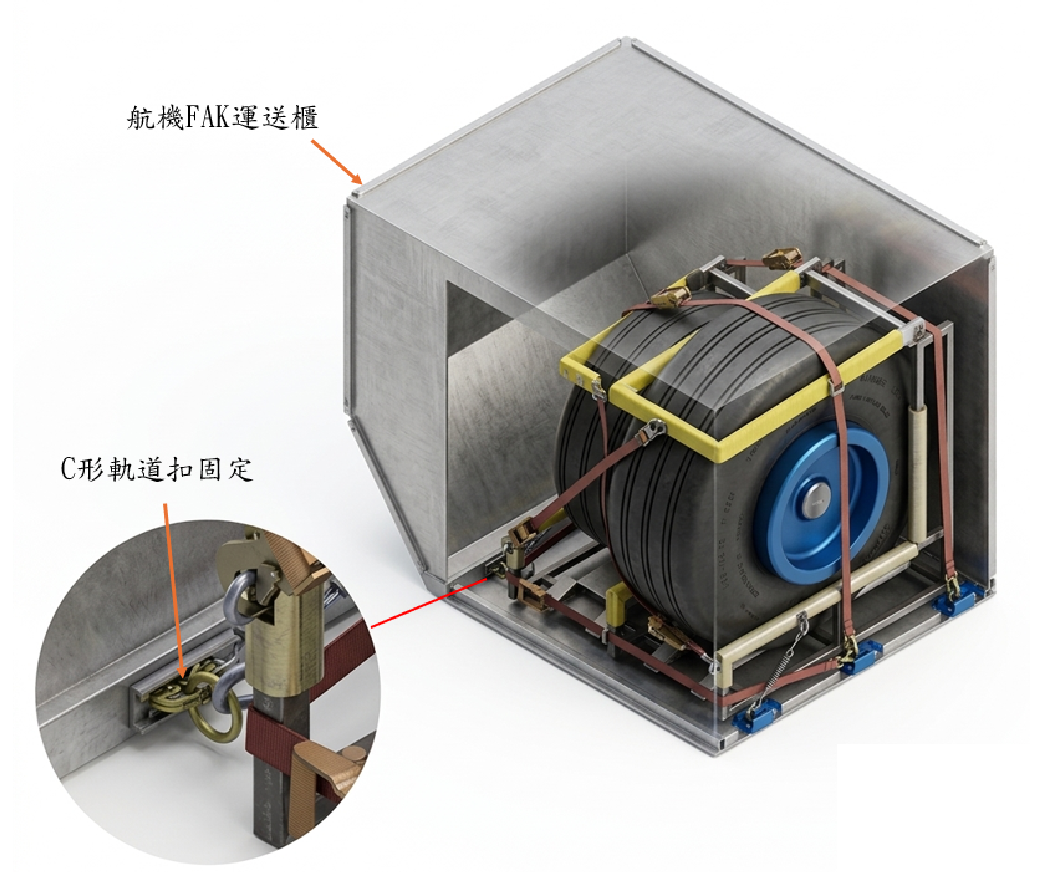
"Safety Seats" Tailor-Made for Aircraft Tires
In the past, aircraft parts were prone to damage from shaking during long-distance transport. By applying their professionalism and creativity, our engineers designed a specialized securing fixture to hold tires firmly in place. This completely eliminates the risk of vibration-induced damage and effectively reduces resource waste, ensuring every component of the aircraft is carefully protected.
Precision Development of "Professional Tools" for Aircraft Doctors
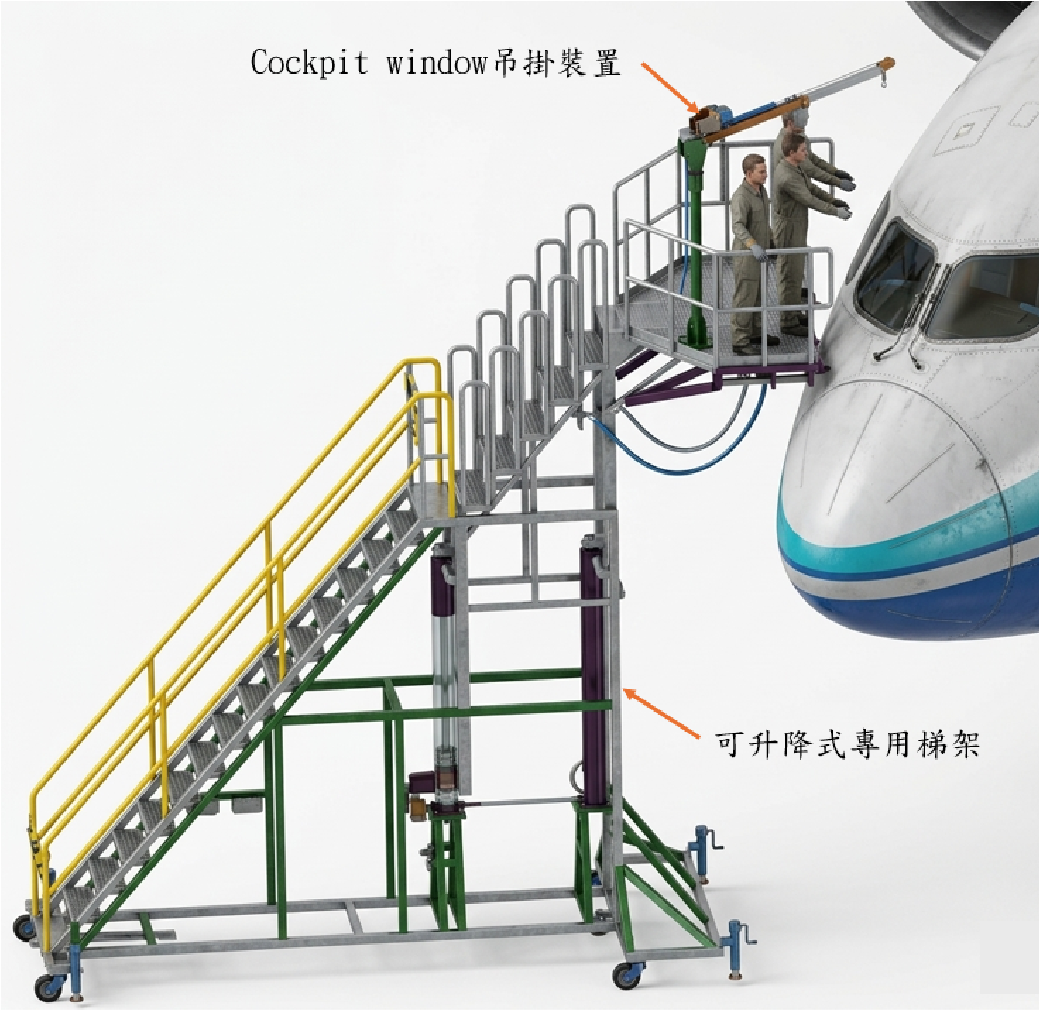
Repairing an aircraft is like performing precision surgery; OEM tools may not be suitable for every scenario. By proactively conducting precise measurements of advanced aircraft models on-site, the team developed dozens of specialized maintenance tools. This achievement demonstrates that Taiwanese engineers possess world-class design capabilities, ensuring flight quality and safety with maximum speed and precision.
Establishment of Preventive Inspection Technology for Leading Edge Slat Systems
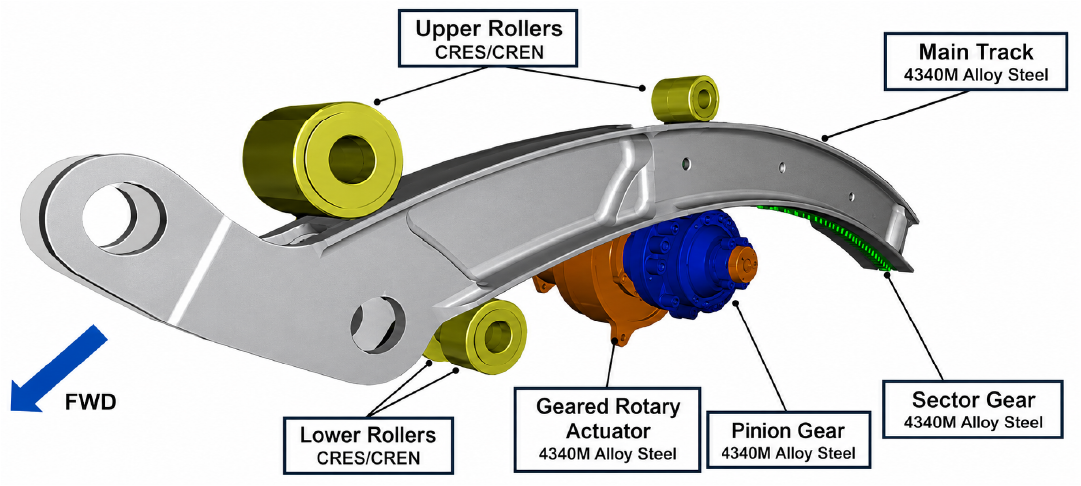
To address the potential risk of material degradation in the leading-edge slat system, the engineering team applied its expertise in flight control system maintenance and technical analysis to independently develop a backlash pre-inspection technology. By translating subtle signs of corrosion and wear, which were previously difficult to detect early, into measurable and interpretable warning indicators, the team successfully identified anomalies before they could escalate into failures. This technology not only effectively enhances flight safety and fleet reliability but also demonstrates the Company's integrated capabilities in professional maintenance, anomaly diagnosis, and preventive testing of flight control systems, adding substantial value to high-end maintenance services and strengthening long-term technological competitiveness.
Aviation Sustainability
In pursuit of global net-zero carbon goals, EGAT is advancing process improvements, enhancing technologies, transitioning to electronic work orders, and adjusting work processes to enhance manufacturing and maintenance efficiency. Moreover, EGAT is committed to using recyclable materials and packaging to reduce environmental impacts throughout the product lifecycle.
| Aviation Sustainability Initiatives | Description | |
|---|---|---|
| Workflow Optimization | Systematically implementing electronic orders to replace paper-based operations. | To reduce paper usage and carbon emissions, internal documents such as procurement/maintenance/service orders are transitioned to digital format. |
| Process Optimization | Identify opportunities for optimization in daily operations and propose, analyze, and execute them as projects to ultimately improve work efficiency. | |
| Upgrades to equipment, operational tooling, and maintenance technologies | Innovative design of maintenance tools | Replace manual labor with mechanization to improve production efficiency. |
| Smart Procurement Decision-Making Platform | One-click generation of integrated reports provides comprehensive data insights, facilitating the formulation of more precise material planning strategies. | |
| Establishment of EASA 147 Maintenance Training Center | Acquired certification from the European Union Aviation Safety Agency (EASA), becoming the first maintenance training center in Taiwan to be EASA-certified for Part-147 type training. | |
| Digitizing tool inventory | Uses electronic tools to scan barcodes to assist with physical inventory, improving efficiency and accuracy. | |
| Waste Reduction Measures | Recycling of metal scrap, machined metal, and other waste materials | Recycling of various metal scraps, including aluminum, nickel, titanium, steel alloys, etc, sold to downstream manufacturers for smelting and return to the metal raw material market, creating a circular economy market. |
| Use of green raw materials | Purchase eco-friendly chemicals | Purchase eco-friendly chemicals to minimize the negative impact on the environment. |
Establishment of the EASA 147 Maintenance Training Center
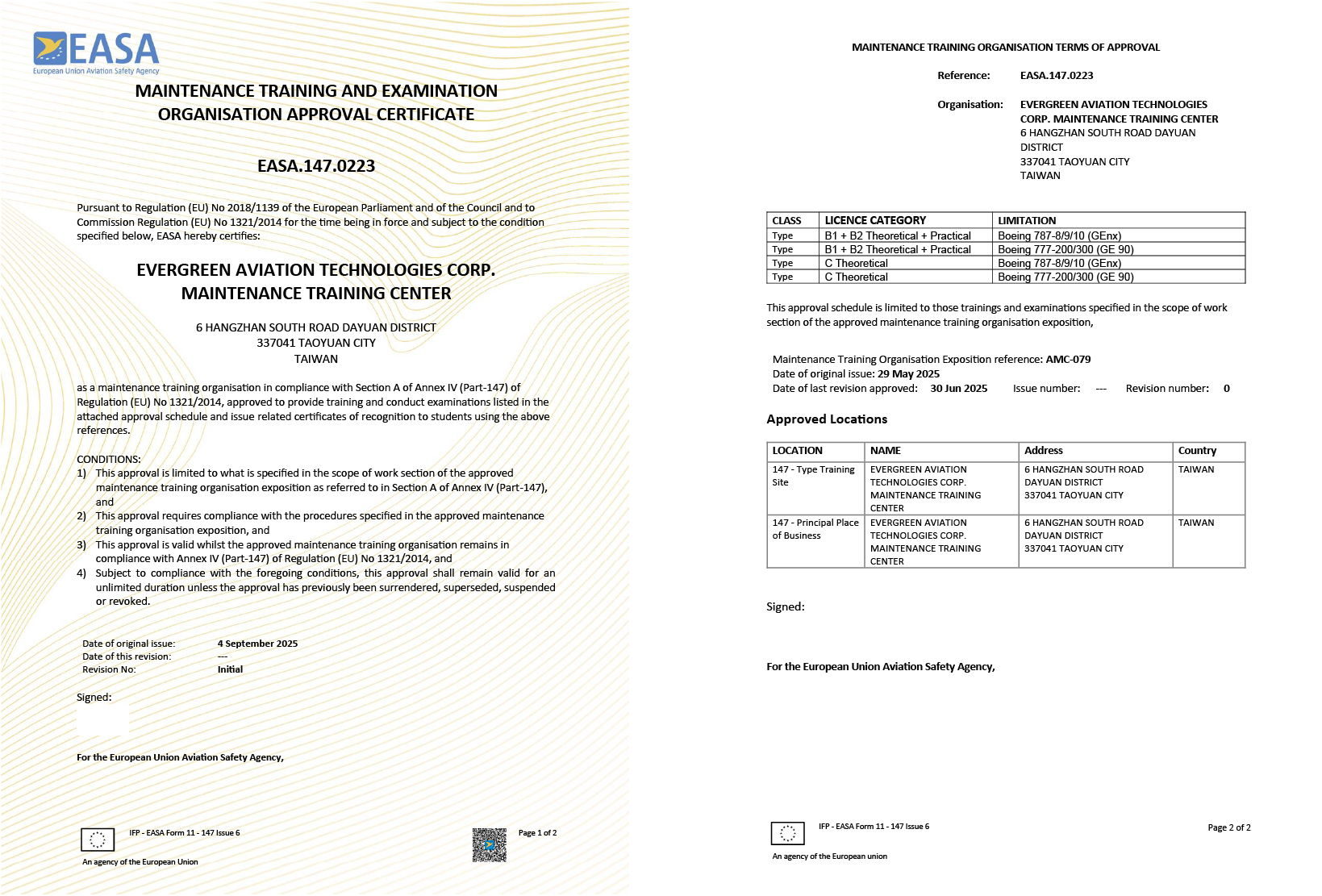
To enhance its in-house maintenance training capabilities and effectively lower outsourcing costs, EGAT has launched a project with the core objective of establishing a maintenance training center certified under EASA Part-147. Since the project's inception, we have integrated existing training resources and addressed regulatory and systemic differences. Following multiple reviews, we successfully obtained official EASA approval on September 4, 2025, becoming the first training institution in Taiwan to receive this certification. Through the project, the Company successfully transitioned from relying on external training to independently conducting EASA-approved B777/B787 B1/B2 type training courses. In the future, this will continue to provide greater operational autonomy and efficiency, ensuring that training efforts are truly and closely aligned with maintenance needs. The synergies between the three aspects of this project are described as follows:
Training Autonomy
Enhance the company's in-house training capabilities for B777/B787 aircraft to eliminate reliance on external training providers' schedules. This allows for course adjustments based on maintenance staffing demand, increasing the flexibility of training schedules.
Training Efficiency
The design of a single course curriculum and instructional process meets the requirements of both EASA and CAA licenses, allowing students to obtain dual certification within a single training session. This significantly enhances training efficiency, eliminates the waste of redundant coursework, and achieves the benefit of "one course, two certificates".
Enhancing Corporate Brand Image and International Visibility
As the first maintenance training center in Taiwan to achieve EASA Part-147 type rating training certification, the Company has significantly enhanced its professional profile and influence in the international market, setting a benchmark for the industry.
Procurement of Eco-friendly Raw Materials
To reduce environmental impact and in consideration of international restrictions on nonylphenol ethoxylates (NPE) detergents, the maintenance plants worked with suppliers to replace cleaning fluids approximately six months to a year ahead of the implementation of NPE regulations in Taiwan. Similarly, the manufacturing plants replaced the cutting fluids in processing equipment with plant-based alternatives to optimize environmental impact and cost.
Given that aerospace manufacturing processes involve the extensive use of chemicals, our suppliers actively invest in the research, development, and implementation of eco-friendly formulations. Similarly, EGAT incorporates environmental impact and employee health into its procurement considerations for raw materials, working together to contribute to the sustainable development of the aerospace industry.
In 2025, the purchase of eco-friendly detergents and cutting fluids totaled approximately NT$5.22 million.
Green Maintenance Plan to Reduce International Aviation Emissions
By developing and manufacturing professional maintenance equipment locally in Taiwan, we eliminate the need to ship heavy machinery from the US and Europe. This not only shortens maintenance turnaround times but also directly reduces carbon emissions from long-distance air freight, using our technological expertise to support environmental protection and low-carbon goals.