
Supply Chain Management
Sustainable Supply Chain Management
EGAT primarily relies on suppliers of aircraft repair parts. The aircraft parts, components, and raw materials provided by suppliers are crucial to the quality of EGAT’s maintenance services and products delivered. Therefore, the Company places great importance on the qualification screening and management of suppliers.
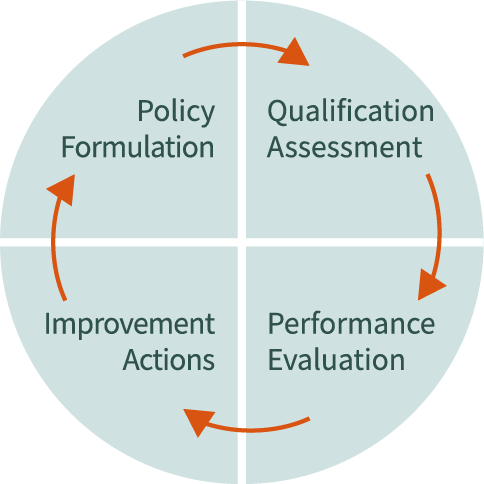
EGAT maintained its Sustainable Supply Chain Management Framework, focusing on four key pillars to drive continuous improvement in supply chain sustainability performance:
Given the wide scope of our supply chain, EGAT classified suppliers by industry sector and management level to enable tiered management, as follows:
| Major Transaction Supplier Industries | Tier 1 Suppliers |
|---|---|
|
|
Policy Formulation and Qualification Assessment
Policy Formulation
EGAT adopted the Supply Chain Sustainable Development Policy and Supplier Code of Conduct (SCoC) as the overarching principles for supply chain management, supported by detailed operational procedures including the Supplier Evaluation Management Regulations and the Supplier Performance Management Regulations. In addition to complying with relevant regulations from civil aviation authorities, suppliers are required to carefully read and sign the SCoC. This Code includes specific requirements related to labor rights, business ethics, anti-corruption, environmental protection, occupational health and safety, and sustainable supply chain management. In addition, a link to EGAT's Sustainability Policy is included in purchase orders, and ESG ratings are incorporated into suppliers' annual performance evaluations to ensure that suppliers have a thorough understanding of and comply with the Company's ESG policies.
| ESG Aspect | Code of Conduct Requirements |
|---|---|
| Environment | Environmental Protection Preserve natural resources, minimize or eliminate harmful substances, reduce energy consumption and greenhouse gas emissions, promote resource recycling and reuse. Efficient Operations: Implement efficient operational methods to minimize adverse environmental impacts, and strive to maintain and protect forests and biodiversity, achieving climate and natural ecosystem stability and balance. |
| Social | Human Rights and Labor Conditions Commit to upholding labor rights and providing workers with necessary safeguards and respect. Occupational Safety and Health Enhance awareness and capabilities in occupational safety and health to prevent workplace accidents, assess workplace safety, provide and maintain safety equipment, ensuring a safe and healthy work environment. |
| Corporate Governance | Business Ethics Adhere to the highest ethical and moral standards, maintain integrity and reliability to uphold business ethics. Sustainable Supply Chain Implement measures to ensure supply chain sustainability and compliance to reduce the risk of business interruptions, moving towards sustainable business operations continuously. Confidentiality Obligations and Information Security Uphold the duty of protecting information to foster productive business relationships, ensuring that no information is leaked. |
Qualification Review
In addition to requiring suppliers to commit to and sign the SCoC, the responsible unit conducts thorough assessments of suppliers’ qualifications, product and service quality, and compliance with ethical business practices. In accordance with the “Supplier Review and Management Regulations”, new suppliers and suppliers seeking reinstatement after more than two years of inactivity are required to complete a “Supplier Selection Evaluation Form” prior to being approved as qualified suppliers. The 2025 supplier selection evaluation conducted by EGAT incorporated ESG criteria with a weighting of 15%. New supplier applicants were required to obtain an ESG score of no less than 10 points and an overall evaluation score of at least 70 points. The requirement was designed to enhance the robustness of supplier ESG reviews and to promote alignment with the Company's sustainable supply chain policy.
In 2025, a total of 119 new suppliers were qualified, all of whom have signed the SCoC. Additionally, for suppliers with transaction amounts exceeding NT$6 million in 2025, a re-signing of the SCoC is conducted every three years, and 103 suppliers signed this recommitment. In 2025, the response rate for the SCoC reached 95.37%. The non-signatories are primarily suppliers designated by customers. Although the signing rate has not reached 100%, EGAT continues to monitor them through a more proactive supplier performance evaluation mechanism to encourage the implementation of sustainable practices.
EGAT continued to engage suppliers, advocating the fulfillment of corporate sustainability commitments, including ethical standards, labor and human rights, and environmental sustainability, while simultaneously promoting anti-corruption practices to foster responsible business conduct and advance mutual sustainable development.
Performance Evaluation and Improvement Actions
Performance Evaluation
EGAT conducts an annual supplier evaluation, focusing on the top 20% of suppliers based on transaction amounts and counts. Evaluation criteria include: On-time delivery performance (30% weight), abnormal invoice ratio (30% weight), order delivery quality (30% weight), reporting of exceptional cases by suppliers (5% weight), supplier ESG rating (5%). In 2025, EGAT conducted supplier performance evaluations for 81 suppliers, representing the top 20% of suppliers based on combined annual transaction amount and number of transactions (Note). Feedback and improvement requests for cause analysis and corrective actions were provided to the lowest-scoring 5 suppliers.
EGAT completed the establishment of its Tier 1 supplier sustainability risk assessment survey (SAQ) mechanism and conducted a current status survey in 2025. To date, surveys and result analyses have been completed for 52 Tier 1 suppliers. Going forward, the Company will strengthen communication regarding expectations and prospects for supplier ESG development through supplier conferences and other venues, seek OEM support, and continue to expand the scope of surveys and management. These efforts will facilitate the identification of high-sustainability-risk suppliers and issues, as well as the planning of guidance and improvement targets for suppliers.
To monitor the progress of ESG implementation among its suppliers, EGAT conducted a further survey of its Tier 1 suppliers. A total of 37 suppliers have completed the survey, which covered four key dimensions: sustainable management, environment, social (including human rights management), and governance. Nearly 30% of these suppliers scored 90 points or above, demonstrating a mature approach to ESG implementation. However, more than half of the suppliers scored below 70 points, indicating significant room for improvement in their ESG performance.
| Aspect | Sustainability Management | Environment | Social | Governance |
|---|---|---|---|---|
| Topics | Sustainability management unit Sustainability report Sustainability management policy | GHG inventory Air quality Energy management Waste reduction targets Biodiversity commitment | Customer privacy policy Information security Product quality and safety Anti-forced labor Employee occupational safety and health training Diversity and inclusion policy Gender pay equality | Product design and lifecycle management Supply chain management policy Sustainable procurement Business Ethics Emergency response Risk management process |
Improvement Actions
If a supplier ranks among the bottom three performers for two consecutive years, the procurement unit may submit an evaluation report; if necessary, the supplier may be removed from the list of qualified suppliers and barred from future transactions. In 2025, no suppliers were repeatedly listed for poor performance evaluations, nor were any suppliers identified as having significant actual or potential negative impacts on the environment or society.
Supplier and Procurement Personnel Training
To enhance the understanding of sustainable supply chain management strategies and goals among suppliers and procurement personnel, and to strengthen their practical execution capabilities, EGAT organized supplier and procurement personnel education and training and provided relevant courses. The 2025 training focused on GHG inventory, covering global carbon reduction trends, emission reduction strategies in the aerospace industry, GHG inventory principles, and common emission sources. Education and training were delivered through a combination of in-person and online sessions, with a total of 53 participants and 132.5 training hours completed.
Supply Chain Conference
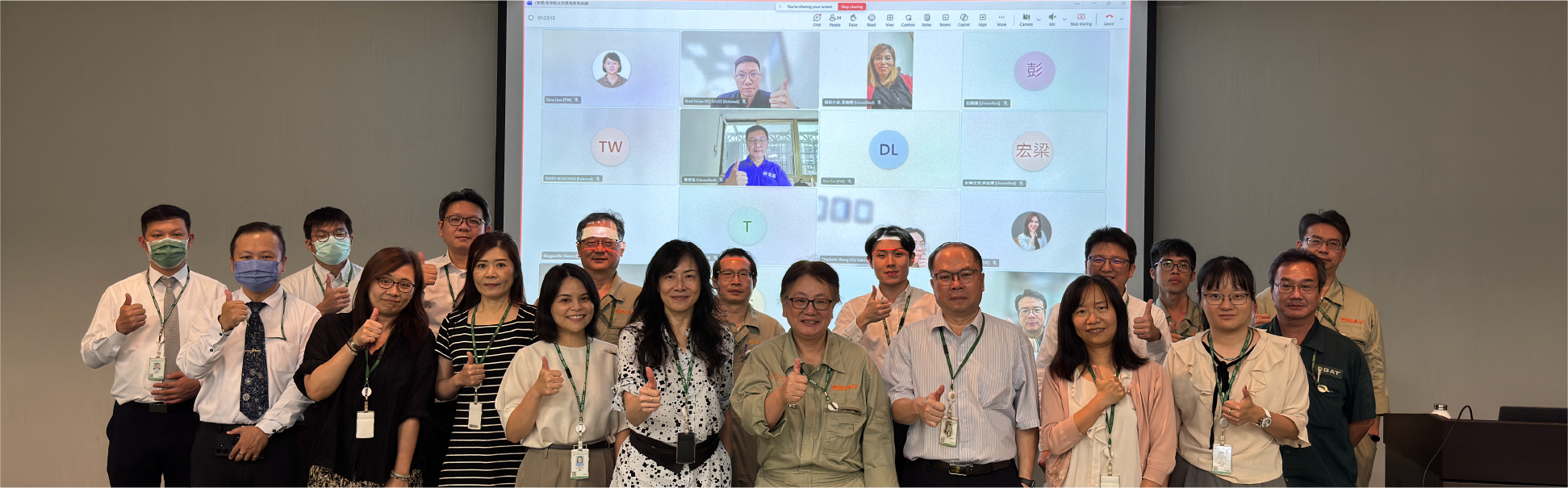
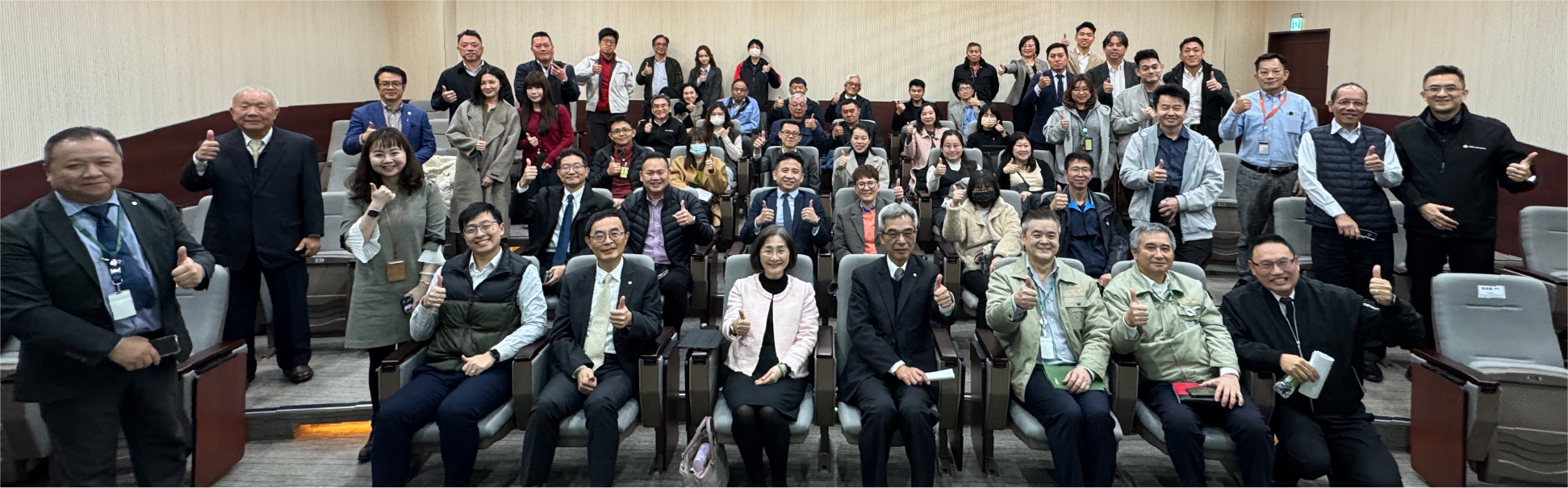
EGAT also hosts supply chain conventions to share the latest ESG trends and the progress of the Company's sustainability goals with its supplier partners. A 1.5-hour special session was arranged during the convention to facilitate knowledge exchange on sustainability disclosure requirements, carbon reduction practices in the aerospace sector, and human rights management. The event was attended by 48 representatives from 45 suppliers. In the future, the Company will continue organizing such sessions to strengthen ESG awareness among supply chain partners and promote collaborative progress toward sustainability goals.
Local Procurement
In addition to assessing suppliers’ sustainability performance, EGAT also placed emphasis on the resilience of critical raw materials and actively supported local suppliers to fulfill our corporate social responsibility. For critical raw material management, EGAT conducted weekly production meetings with customers to verify schedules for material delivery, production, and shipment. Since critical raw materials were sourced through customer-designated suppliers, with pricing and quality controlled by the customer, any abnormalities in raw material supply were immediately escalated and the customer was requested to coordinate with the material supplier to discuss and resolve the issue.
For local procurement, EGAT primarily engages in cooperation with local suppliers to create local employment opportunities. In 2025, local procurement in Taiwan accounted for approximately 14.57% of total procurement (Note).
Note: EGAT’s main procurement items include raw materials, equipment, and services, with raw materials comprising about 86% of total procurement. However, due to the majority of raw material procurement coming from aircraft manufacturers in Europe and the United States, the overall proportion of local procurement is relatively low.
Green Procurement
To minimize the environmental impact of its procurement activities, EGAT promotes green procurement measures by prioritizing eco-friendly products and services in its decision-making process, using domestic and international green product certifications as a reference. In 2025, EGAT's green procurement amounted to approximately NT$5.47 million. Procured items included photocopy paper certified by the PEFC (Programme for the Endorsement of Forest Certification), cleaning supplies with the U.S. Green Seal, as well as toner cartridges and property insurance services that obtained the Class 1 and Class 3 environmental labels in Taiwan, respectively.