

Climate Action
Climate Change Governance
To actively strengthen the sustainability management philosophy and environmental sustainability governance, EGAT has designated the Board of Directors as the highest governance body and, in 2023, approved the establishment of the Sustainability Committee under the Board. The Committee is responsible for overseeing the management and review of sustainability and climate-related issues, integrating climate governance strategies, management systems, and business processes into the Company’s existing governance framework.
Within the Sustainability Committee, the Sustainability Committee Executive Team is tasked with managing climate change-related issues. This includes regular monitoring of domestic and international climate policies and environmental regulations, identifying climate-related risks and opportunities, and assessing the potential impacts of climate change on operations. Based on these assessments, EGAT formulates and implements carbon-reduction strategies, energy management, and adaptation measures to ensure the stability and resilience of its operations. In addition, the Sustainability Committee reports the implementation status and results to the Board of Directors on an annual basis and discloses the information externally to enhance corporate transparency and strengthen stakeholder trust.
Climate Risk and Opportunity Governance Structure and Actions
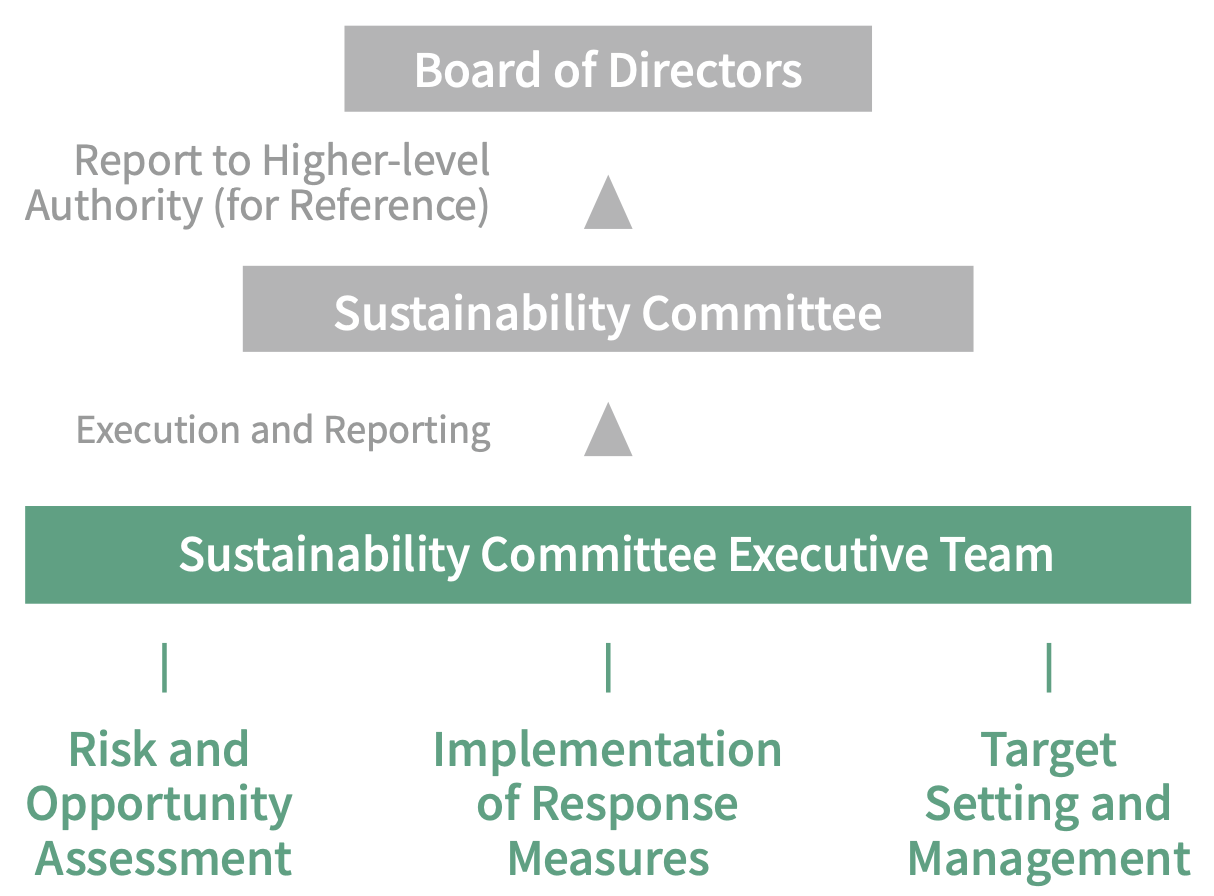
Climate Risk and Opportunity Evaluation Process
To assess the impact of climate change on operations and strategic management, EGAT established a management process for climate-related risks and opportunities through the Sustainability Committee Executive Team in 2023. Given the continuous evolution of the industrial environment and climate risk patterns, EGAT re-identified climate-related risks and opportunities in 2025 and continued to refine its identification and assessment methodologies to enhance the effectiveness of managing climate impact identification and strategic responses.
Risk Identification
Drawing on the climate risk and opportunity frameworks of the Task Force on Climate-related Financial Disclosures (TCFD) and the Carbon Disclosure Project (CDP), and incorporating material topics for the aerospace industry from the Sustainability Accounting Standards Board (SASB) alongside international peer trends, we synthesized external trends and internal issues as the basis for our risk assessment. From this process, we identified seven industry-related climate risks and four climate opportunities.
Risk Evaluation
Each department systematically identifies and assesses the potential impact of various climate-related issues on EGAT's operations, based on anticipated regulatory trends, scenario analysis assumptions, and industry developments. The assessment covers the scope of impact across the value chain, the potential timeframes, and the specific financial items and categories affected, enabling the Company to focus on the nature and extent of the impact of various climate issues across different operational levels.
Risk Prioritization
Following the risk and opportunity materiality principles within EGAT's risk management framework, the Company evaluates various climate-related issues based on their potential financial and operational impacts. These issues are scored according to their likelihood of occurrence and level of impact, then compared and prioritized to identify the most material climate-related risks and opportunities. In 2025, three material industry-related risks and three material climate opportunities were identified.
Risk Response and Oversight
For identified significant climate-related risks and opportunities, EGAT implements risk responses and relevant mitigation and adaptation strategies based on its risk management framework, incorporating them into the overall risk and opportunity management process. The implementation progress and management effectiveness of relevant countermeasures are continuously monitored through internal management mechanisms and KPIs, and are regularly reported to the relevant sustainability governance units and the Board of Directors for review to serve as a critical basis for strategic adjustments and operational management.
Note 1: The impact periods are categorized into short-term (1–5 years), mid-term (6–10 years), and long-term (over 10 years).
Note 2: The value chain includes upstream (suppliers), EGAT’s own operations, downstream (customers), and investments.
Climate Risk and Opportunity Identification Results
Based on various international initiatives and sustainable development trends, EGAT identified 11 climate-related risks and opportunities for the industry in 2025. Each department follows the risk management process to assess the likelihood and impact of various climate risks and opportunities and conducts a materiality analysis. Ultimately, the Company prioritizes the management of two major transition risks ("requirements and regulation of existing products and services" and "low-carbon energy transition"), one major physical risk ("increased severity of extreme weather events"), and three major opportunities ("use of new technologies", "entry into new markets", and "renewable energy development").
EGAT’s 2025 Climate Risk and Opportunity Assessment
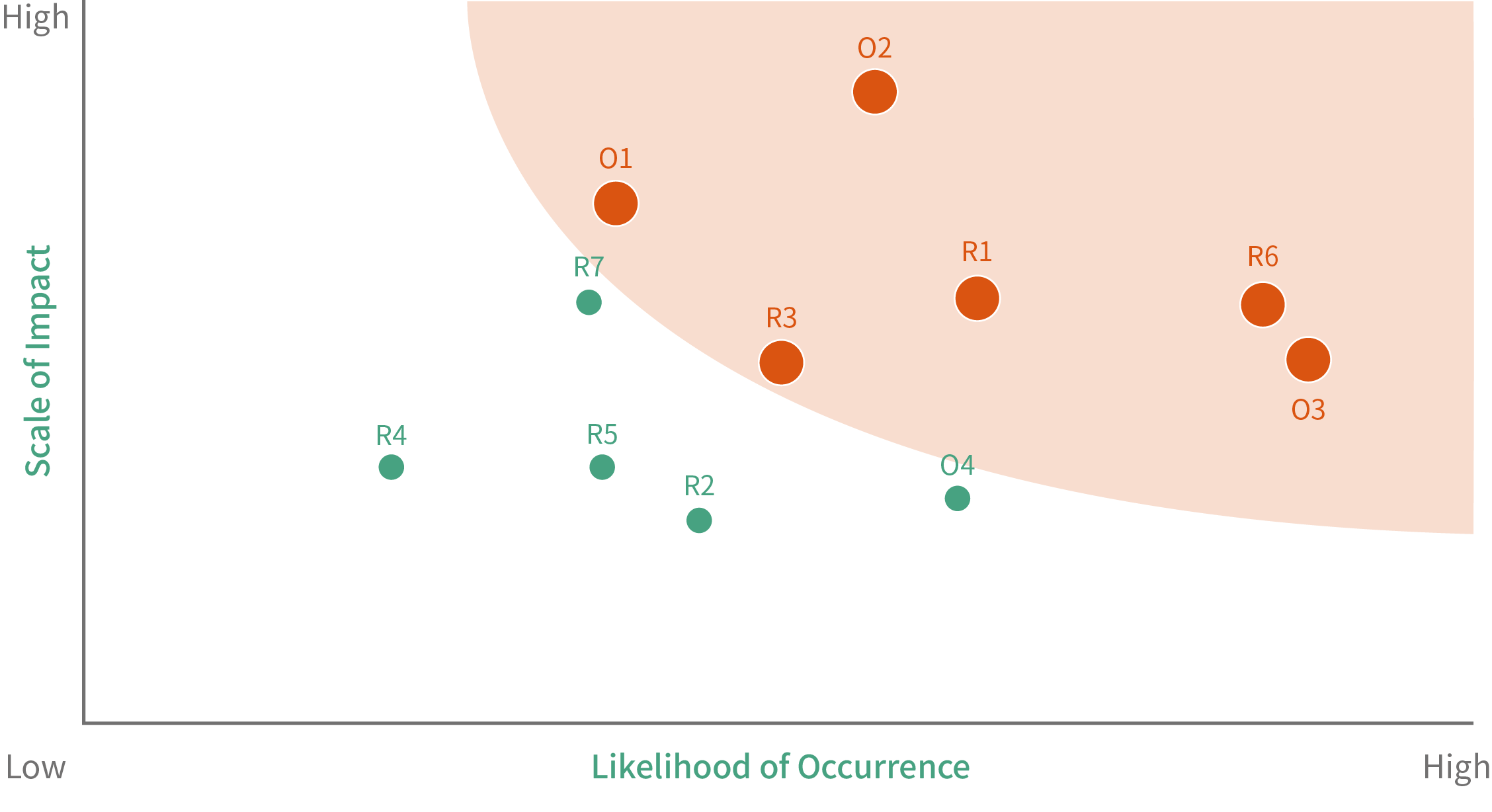
Transition risks
- R1 Requirements and regulation of existing products and services
- R2 Increasing GHG emissions pricing
- R3 Low-carbon energy transition
- R4 Increasing concerns and negative feedback from stakeholders
- R5 Changes in customer behavior
Physical risks
- R6 Increased severity of extreme weather events
- R7 Changes in rainfall patterns and extreme shifts in climate patterns
Opportunities
- O1 Use of new technologies
- O2 Entry into new markets
- O3 Renewable energy development
- O4 Recycle and reuse