Occupational Safety and Health
EGAT upholds the policy of “Safety First, Quality is Everything” and is committed to providing all employees with a safe and hygienic workplace environment in order to minimize the negative impact of occupational safety and health disasters on employees. EGAT has established the Occupational Safety and Health Management Handbook, which primarily covers labor safety and health management and the allocation of responsibilities, equipment maintenance and inspection, work safety and health standards, training, health guidance and management, first aid and rescue, and the preparation, maintenance, and use of protective facilities. Additionally, in compliance with occupational safety and health regulations, the Company has formed an Occupational Safety and Health Committee. The committee is chaired by the Chairman and consists of 3 committee members (employers), 15 labor representatives, and 10 duty participants (including Occupational Safety and Health Division personnel, supervisors, and physicians). The committee convenes once a month to discuss the statistics on occupational hazards and 1-million-man hours of zero lost time injury, safety audits and improvements, various safety and health matters, health management information, regulatory updates and compliance awareness for safety and health laws and regulations, and compliant occupational safety and health training. The decisions are made at the meeting and then implemented.
Occupational Safety and Health Management
Occupational Safety Management System
EGAT obtained Taiwan ISO 45001 Occupational Safety and Health Management System certification in 2022, affirming its adherence to occupational safety and health regulations and fulfillment of related responsibilities and obligations. At the same time, for newly introduced engineering projects or processes, operational risks are evaluated in accordance with ISO 45001 procedures and documented in the change control log for future reference. In addition to continuous improvement of the work environment and ongoing implementation of occupational environment testing and automatic inspection of hazardous machinery equipment, EGAT ensures occupational safety and health training for employees, along with relevant certification. These measures aim to eliminate workplace hazards, reduce false alarms, prevent occupational accidents, and actively promote employee physical and mental health, progressing towards the goal of a healthy and safe workplace. EGAT’s occupational safety and health management system covers all workplaces, including Taoyuan, Guanyin, and TSA Maintenance Department, totaling 3,526 personnel, including 3,257 employees and 269 workers such as security guards, construction contractors, and maintenance/manufacturing workforce dispatch personnel.
Hazard Identification, Risk Assessment, and Accident Investigation
To ensure effective operation of hazard identification and risk assessment related to occupational safety, EGAT follows the “Regulations Governing Safety and Health Hazard Identification and Risk Assessment Management” for management. The management process includes:
- Departmental personnel analyze potential hazards and risks inherent in their work responsibilities and record them in the “Safety and Health Hazard Identification and Risk Assessment Form”, considering factors such as operating conditions, frequency, and environment.
- Units conduct safety and health risk assessments based on the “Safety and Health Hazard Identification and Risk Assessment Form”, considering the severity and likelihood of hazard events. Severity factors include potential injury or impact areas, number of casualties, and severity of injuries, while likelihood factors include the effectiveness of existing protective facilities and the functionality and usage of personal protective equipment. EGAT conducts regular annual hazard risk identification assessments, with departments conducting risk assessments periodically as needed.
- Based on the severity and likelihood of hazard events, risk matrices are generated, and identified risks are classified into five levels for control. Corresponding response measures are then implemented based on the risk level, as per the department's risk control plan reviewed by department heads and consolidated by the Occupational Safety and Health Division for implementation.
- Each department implements risk control plans based on the hazards identified, following the “Safety and Health Hazard Identification and Risk Assessment Form”. These plans are then reviewed by department supervisors before being submitted to the Occupational Safety and Health Division for consolidation. The submitting departments then implement the plans according to the agreed-upon content.
| Risk Level | Risk Type | Response Measures |
|---|---|---|
| 5 | Very High Risk (Unacceptable Risk) | Promptly assess the effectiveness of current protection measures and swiftly execute engineering or management improvement plans, operational controls, or bolster response capabilities. |
| 4 | High Risk (Unacceptable Risk) | Promptly review the effectiveness of current protection measures and implement engineering or management improvement plans, operational controls, or enhance response capabilities within a reasonable timeframe. |
| 3 | Moderately High Risk (Temporarily Acceptable Risk) | While temporarily acceptable, it is essential to ascertain if more robust protection measures are available or if appropriate operational protocols, controls, and safety measures are in place. This has been identified as an area for improvement during the risk assessment meeting. Address the effectiveness of current protection measures and implement engineering or management improvement plans, operational controls, or enhance response capabilities within a reasonable timeframe. |
| 2 | Moderate Risk (Temporarily Acceptable Risk) | Temporarily acceptable. |
| 1 | Low Risk (Acceptable Risk) | Acceptable. |
Occupational Safety and Health Participation, Consultation and Communication
If supervisors, employees, or external personnel and related organizations have any communication and consultation needs regarding the development, implementation, and evaluation of the occupational safety and health management system, the Occupational Safety and Health Division will coordinate and notify the relevant departments to answer the comments and may convene meetings to discuss the issues if necessary. The Occupational Safety and Health Division will also publicize the relevant policies and objectives through training, meetings, posters, or announcements on the company’s web site, so that all employees and external stakeholders can understand them. The Division will also compile internal and external communication information on a monthly basis, to ensure that the Occupational Safety and Health Management System is adjusted in response to changes in both the internal and external environments.
Occupational Safety and Health Training
In addition to establishing a comprehensive occupational safety management system, EGAT provides comprehensive occupational safety and health training to ensure the quality of this management process and internalize employees’ occupational safety awareness. The training targets include employees and workers to prevent potential impacts of occupational safety risks. In 2025, a total of 113 sessions of occupational safety-related training were held, with 2,284 participants.
| Training Course Name | Description of Training Courses | Target Participants | Number of Sessions | Number of Participants |
|---|---|---|---|---|
| General occupational safety and health education training | Pre-employment training for new employees before assuming job duties | New employees | 25 | 237 |
| Hazardous operations supervisor refresher training | Professional Training on Safety for Operations Involving Oxygen Deficiency, Specific Chemical Substances, Dust, and Organic Solvents | Employees with relevant certifications | 7 | 30 |
| Aerial Work Platform Operator Training | Aerial work platform operation safety regulations | Personnel with justified operational requirements | 4 | 241 |
| Crane refresher training | Crane operation safety regulations | Employees who have obtained operating qualifications | 11 | 125 |
| Forklift refresher training | Forklift operation safety regulations | Employees who have obtained operating qualifications | 8 | 97 |
| Aerial Work Platform Operator Refresher Training | Aerial work platform operation safety regulations | Employees who have obtained operating qualifications | 2 | 156 |
| First aid personnel refresher training | First aid personnel professional training | Employees with relevant certifications | 4 | 63 |
| General Hazard Awareness Education and Training | Chemical hazard awareness professional training | Employees/new employees with justified operational requirements | 11 | 376 |
| Class A Occupational Safety and Health Operations Supervisor Training | Professional Training on Occupational Safety and Health Laws and Management | Maintenance Department Safety Supervisor | 3 | 10 |
| Contractor education and training | Repair Hangar Safety Regulations and Occupational Hazard Notification | External Contractors | 4 | 72 |
| Crane operations initial training | Crane operation safety regulations | Personnel with justified operational requirements | 1 | 2 |
| Crane operator refresher training | Crane operation safety regulations | Employees who have obtained operating qualifications | 4 | 14 |
| Class B Boiler Operation Refresher Training | Boiler operation safety regulations | Employees who have obtained operating qualifications | 2 | 2 |
| General occupational safety and health education and training and refresher training | Course regulations for general occupational safety and health education and training | Current employees | 1 | 318 |
| First Aid Training (Dayuan Plant) | First Aid Basics, CPR Training | New employees (including MAS)/First aid support personnel for fire drills | 14 | 432 |
| New Employee Education and Training | Occupational Safety and Health Education and Training (first aid basics) | New employees | 9 | 27 |
| Education and Training for New Vietnamese Personnel | Occupational Safety and Health Education and Training (first aid basics) | New employees | 1 | 2 |
| Departmental Fire Drills | CPR training | Manufacturing Division 2F employees | 1 | 70 |
| Chemical Splash Emergency Response Education Training | Correct Use of Chemical Decontamination Agents | Chemical Processing Section, Specialty Products Department | 1 | 10 |
| Total | 113 | 2,284 | ||
2025 Occupational Injury Statistics
| Employees | Non-Employee Workers | |
|---|---|---|
| Total Number of Hours Worked | 6,328,584 | 478,288 |
| General Occupational Injury Cases | 13 | 1 |
| Severe Occupational Injury Cases | 0 | 0 |
| Number of Fatalities | 0 | 0 |
| Total Recordable Injury Frequency Rate (times) | 13 | 1 |
| Lost Workdays | 30 | 3 |
| Occupational Injury Fatality Rate | - | - |
| Severe Occupational Injury Rate | - | - |
| Disabling Injury Frequency Rate (FR) | 2.05 | 2.09 |
| Disabling Injury Severity Rate (SR) | 4.74 | 6.27 |
| Frequency Severity Index | 0.10 | 0.11 |
Note 1: Occupational injury cases refer to instances where workers sustain injuries or illnesses resulting in death, permanent total disability, permanent partial disability, temporary total disability, or other disabilities with a loss of one or more days of work (including commuting accidents).
Note 2: Disabling Injury Frequency Rate (FR) = number of occupational accidents × 10^6 / total number of hours worked.
Note 3: Disabling Injury Severity Rate (SR) = total number of days lost in occupational accidents × 10^6 / total number of hours worked (the number of days lost is calculated in calendar days, excluding the day of injury and the day of return to work).
Note 4: Severe occupational injuries refer to injuries where workers cannot recover to their pre-injury health status within six months, excluding fatalities.
Note 5: Serious occupational injury rate = (number of major occupational injuries) × 10^6 / total number of hours worked.
Note 6: A fatality is considered as 6,000 workdays lost.
Promoting Employee Health
EGAT is committed to promoting a “safety-first, health-priority” work environment, establishing a sustainable healthy workplace, implementing labor health protection, and providing services such as superior health examinations and full-time physician consultations that exceed regulatory requirements. Efforts are made to promote health, aiming to become a “healthy, safe, and happy” workplace.
Non-Occupational Medical Services
- Health Tracking Checkups: In addition to labor safety checkups that comply with regulations, EGAT also provides items that are superior to regulations, including: lipid checks, cardiovascular checks, liver and kidney function checks, rheumatoid arthritis checks, and cancer checks. In 2025, a total of 998 people participated in health examinations, with a subsidy amount of NT$1,997,215.
- Full-time On-site Physician and Clinic Services: EGAT provides full-time physician residency and clinic services within the maintenance facility, to perform injury and illness rehabilitation for colleagues, work suitability assessments, work-related injury prevention, and health counseling services. Assess the injuries and illnesses of employees to determine their condition. If necessary, provide medical prescriptions, conduct functional assessments to evaluate their ability to perform tasks, and offer recommendations for modifying their job responsibilities or work environment to accommodate their health needs. The subsidy amount for 2025 was NT$66,743.
- Influenza Vaccine: Provide influenza vaccination every year. In 2025, a total of 270 people received the vaccination, and the subsidy amount was NT$111,510.
- First-Aid Kit Supplies: EGAT provides sterile cotton swabs, gauze, normal saline, povidone-iodine pads, burn ointment, and triangular bandages for injured or ill employees to be used for wound dressing, bandaging, and stabilization. In 2025, total subsidies amounting to NT$92,743.
Occupational Health Services
| 2025 Occupational Health and Safety Workplace Measures | Service Targets | Program Description |
|---|---|---|
| Specialized medical examinations | Personnel working in special environments | Special medical examinations arranged based on the results of environmental monitoring by the Occupational Safety and Health Division, with health management and classification based on examination results. |
| Disease prevention for abnormal workloads | Company-wide | Identify high-risk employees based on workload questionnaires and physical examination results and arrange interviews. |
| Rehabilitation program for selected workers and workers with occupational injuries and illnesses | Company-wide | New employees are assigned to roles based on their physical examination results to ensure their physical and mental health meets the job requirements. Develop return-to-work plans for employees affected by occupational accidents, based on the results of their medical evaluations. |
| Workplace maternal health protection program | Female employees | Arrange a consultation with a physician for female employees during pregnancy or within one year after childbirth. |
| Prevention of human factor hazards | Company-wide | Investigate workplaces or employees with musculoskeletal injuries or potential musculoskeletal injuries and implement prevention and improvement measures. |
| Physiological evaluation of respiratory protection program | Departments using protective equipment at the work site | Conduct respiratory protection physiological health assessment. |
| Regular on-site consultations by occupational medicine specialists | Company-wide | The maintenance facilities have occupational physicians who conduct on-site consultations once a month. The manufacturing plants have occupational physicians who conduct on-site consultations once every three months. |
Health Promotion Activities
| 2025 Health Promotion Activities | Activity Description | Frequency | Number of Participants |
|---|---|---|---|
| COVID-19 vaccine | Government-funded COVID-19 vaccine | Two vaccination drives/year | 349 persons |
| Influenza vaccine | Government-funded and Company-funded influenza vaccines | Two vaccination drives/year | 316 persons |
| Musculoskeletal health exercise | Arrange for 5-minute workouts | Two vaccination drives/year | 72 persons |
| Regular occupational health service-related topics | Monthly health-related topics promoted by physicians at the monthly comprehensive safety meeting. | Once/month | Entire maintenance facility staff |
| Health Promotion Announcement - Email Announcement | Relevant announcements will be published and communicated to all employees based on employee health examination results and various preventive healthcare topics. | Once/month | Entire manufacturing plant staff |
| Updating Medical Journals for Employees to Read | Medical magazines are available in the medical room for staff to borrow. | Once/month | All employees |
EGAT supported employee participation in the 26th Sri Chinmoy 6-Day Ultramarathon held in France in 2025, offering a subsidy of NT$26,538 to encourage engagement in global sporting events. A colleague from the Quality Assurance Department achieved impressive results in the marathon, securing 16th place overall, 14th place in the men's division, and 3rd place in the 50+ age group.

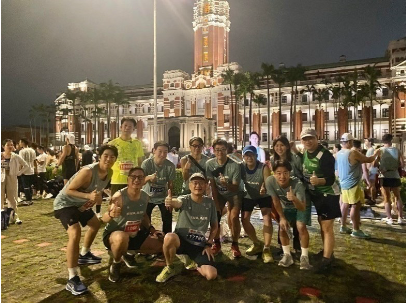
In addition to subsidizing employees' participation in international sporting events, EGAT encourages employees to cultivate regular exercise habits, enhance their physical and mental well-being, and challenge their personal limits. To support this initiative, the Company provided electronic gift certificates and shopping vouchers as incentives to employees who participated in the 2025 EVA Air Marathon. A total of 72 employees took part in the event, with total rewards amounting to NT$50,900.
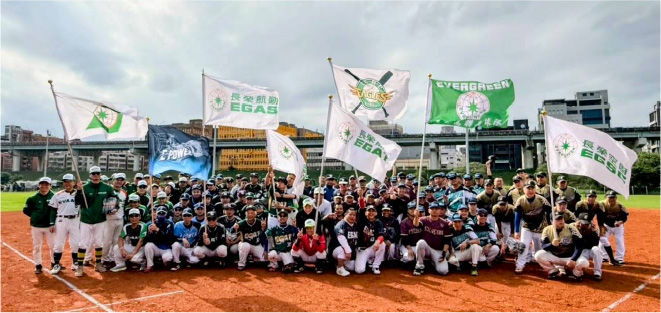
In addition, EGAT achieved outstanding results in 2025, winning the championship in the Health Group at the “Evergreen Cup Slow Pitch Softball Tournament” and finishing as the runner-up in the “Airport Cup Slow Pitch Softball Tournament”. A total of 50 people participated in the two competitions, with total subsidies amounting to NT$119,307. The slow-pitch softball activity not only promotes employee fitness but also provides an opportunity for enthusiasts from across the Group's companies to strengthen friendships and exchange skills.
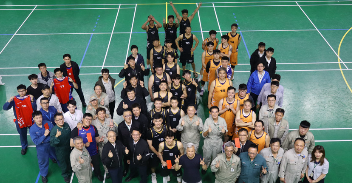
To encourage employees to relax and build stronger bonds through recreational activities outside of work, EGAT organized the “EGAT Basketball Cup” and provided celebration bonuses to all participating teams as an incentive for enthusiastic involvement. A total of 130 employees participated in 2025, with subsidies and bonuses amounting to NT$314,860.